 indika.creator@gmail.com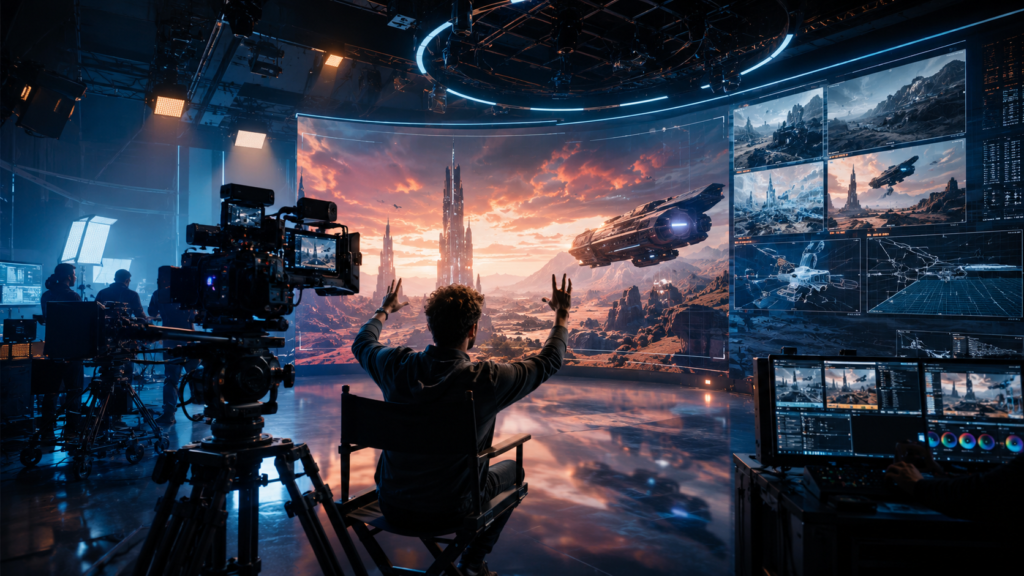
Colour changed visual storytelling. Digital cameras made production more accessible. Streaming changed distribution. Today, Generative AI is becoming the next major revolution in filmmaking.
Generative AI, or GenAI, refers to artificial intelligence systems that can create new content such as text, images, video, music, voices, storyboards, subtitles, posters, trailers, and visual effects. For filmmakers, this is not just another digital tool. It is becoming a creative partner that can support the entire filmmaking process — from the first idea to the final marketing campaign.
Modern AI tools can now help writers develop stories, directors visualize scenes, producers plan shoots, editors improve post-production, and marketers promote films more effectively. The result is a new creative environment where imagination can be tested faster, cheaper, and with more visual power than ever before.
AI in Story Development
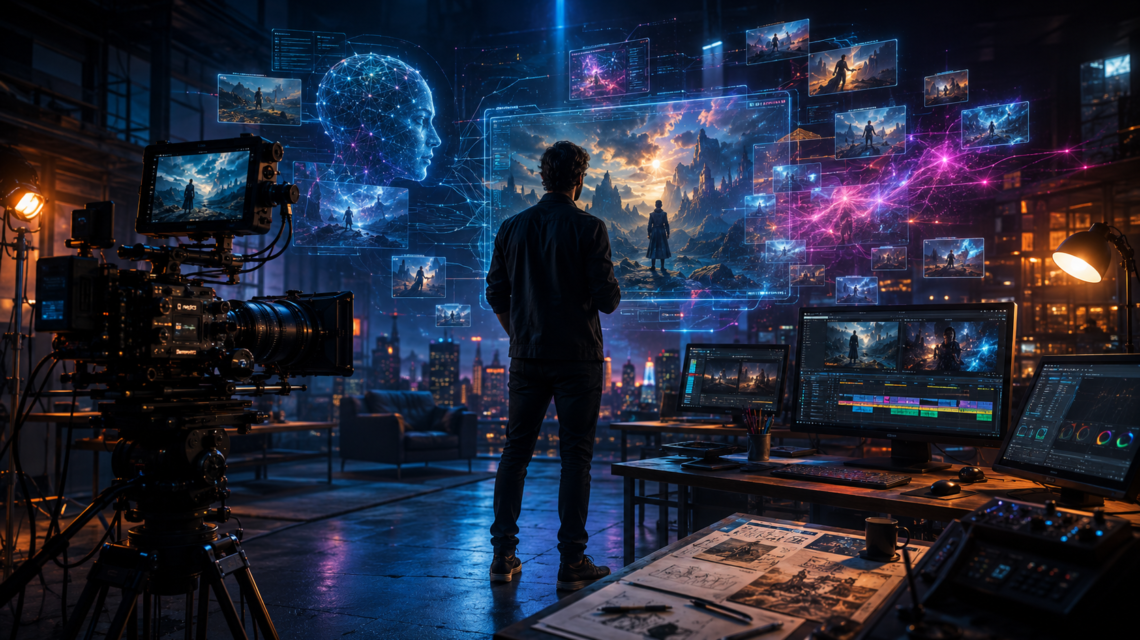
Every film begins with an idea. Traditionally, a writer spends weeks or months developing a concept, characters, structure, dialogue, and emotional flow. GenAI can now support this early stage by helping creators generate story ideas, loglines, character profiles, scene outlines, emotional beats, alternative endings, and pitch documents.
However, AI should not replace the writer’s soul. A strong film is not only a sequence of events. It is a human emotional journey. AI can give options, but the filmmaker must decide what is meaningful, original, culturally relevant, and emotionally powerful.
For example, if a filmmaker is developing a thriller, AI can suggest suspense structures, possible twists, villain motivations, and scene progression. But the true emotional truth of the story must come from the writer’s understanding of people, society, pain, love, fear, and conflict.
The best way to use AI in writing is not to ask, “Write my film.” A better approach is to ask:
How can I make this character stronger?
How can I increase suspense in this scene?
What are five possible emotional reversals?
How can this scene work visually without too much dialogue?
In this way, AI becomes a creative assistant, not the real author.
AI in Visual Development and Storyboarding
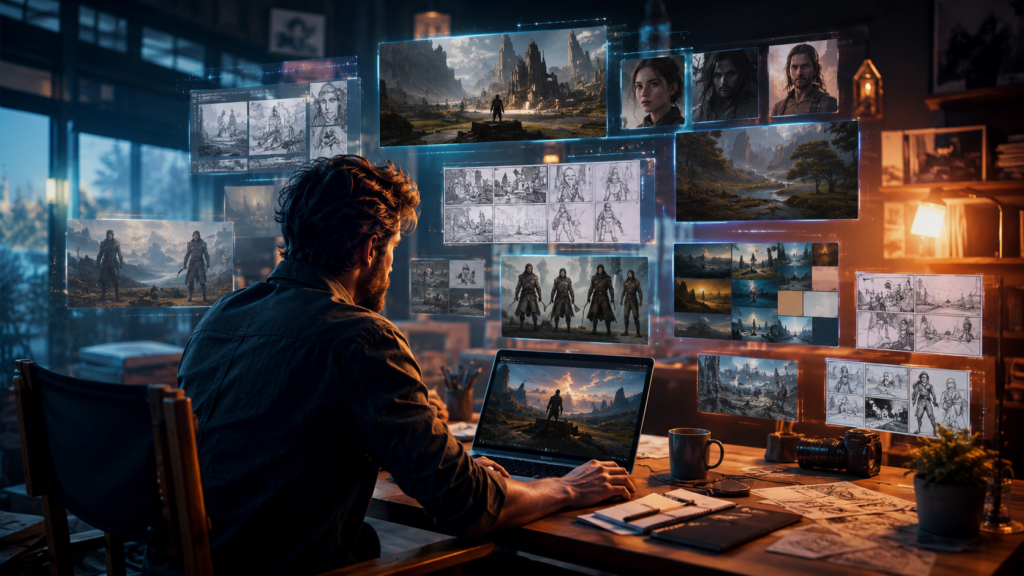
One of the most powerful uses of GenAI is visual development. Before AI, filmmakers needed illustrators, designers, or reference images to communicate the look and mood of a film. Now, directors can create moodboards, storyboard frames, character concepts, costume ideas, lighting references, and cinematic compositions within minutes.
This is especially valuable for independent filmmakers and smaller film industries. A director can generate visual references for a village drama, a crime thriller, a romantic scene, a fantasy world, or a suspense sequence before the actual production begins.
This helps the director, cinematographer, art director, costume designer, and producer understand the same visual direction. Instead of only explaining a scene verbally, the filmmaker can show the emotional and visual mood.
But there is also a risk. If everyone uses the same AI styles and prompts, films may begin to look similar. Therefore, the filmmaker’s personal taste becomes more important than ever. AI can create visuals, but the director must create a unique visual identity.
AI Video Generation
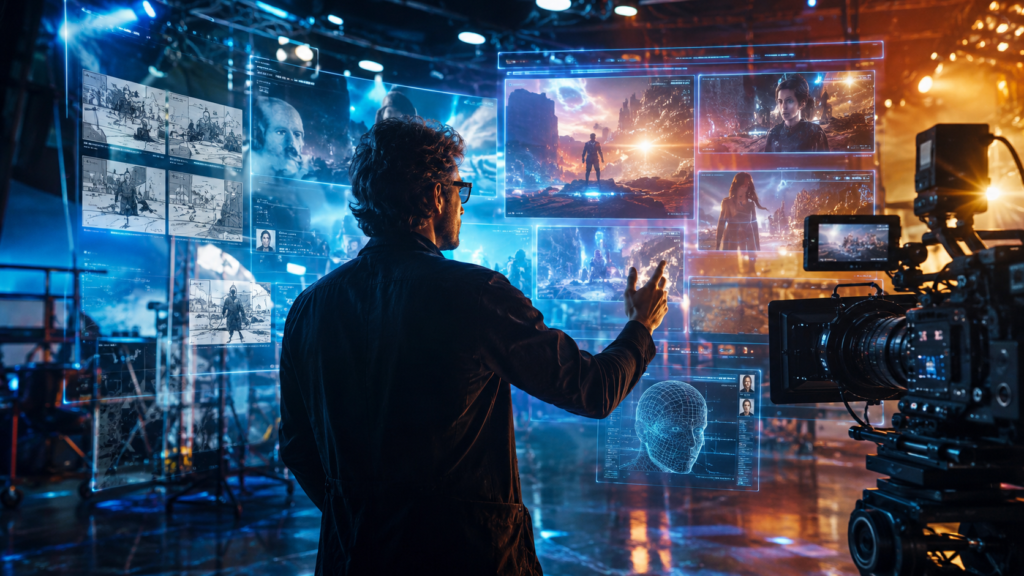
Text-to-video and image-to-video AI tools are among the most exciting developments in modern filmmaking. These tools can generate moving images from written prompts or reference images. A filmmaker can describe a cinematic scene, and AI can create a short video clip with atmosphere, camera movement, lighting, and mood.
This can be used for previsualization, concept trailers, pitch videos, music videos, fantasy sequences, social media promos, and experimental films.
For example, before shooting an expensive action scene or emotional montage, a director can create an AI-generated test version. This allows the team to understand the rhythm, mood, camera movement, and visual style before spending money on production.
For producers, this is also powerful. Investors often find it difficult to imagine a film from a script alone. An AI-generated concept trailer or mood film can make a pitch much stronger.
However, AI video still has limitations. It can struggle with long-form continuity, realistic human performance, character consistency, complex action, and exact emotional timing. Therefore, AI video should currently be seen as a powerful support tool, not a full replacement for professional filmmaking.
AI in Production Planning
Filmmaking is not only creativity. It is also organization. A production involves schedules, budgets, actors, locations, props, costumes, crew, equipment, permissions, transport, and daily planning.
GenAI can help producers and assistant directors organize this process more efficiently. It can create shooting schedules, call sheet drafts, prop lists, costume notes, location requirements, budget breakdowns, risk assessments, and scene-by-scene production plans.
A filmmaker can upload a script and ask AI to identify all night scenes, outdoor scenes, vehicle scenes, crowd scenes, rain scenes, or high-cost scenes. This helps the producer understand the practical complexity of the film.
For small production teams, this is extremely useful. Many films face problems not because the story is weak, but because planning is weak. AI can reduce confusion and improve production discipline.
AI in Editing and Post-Production
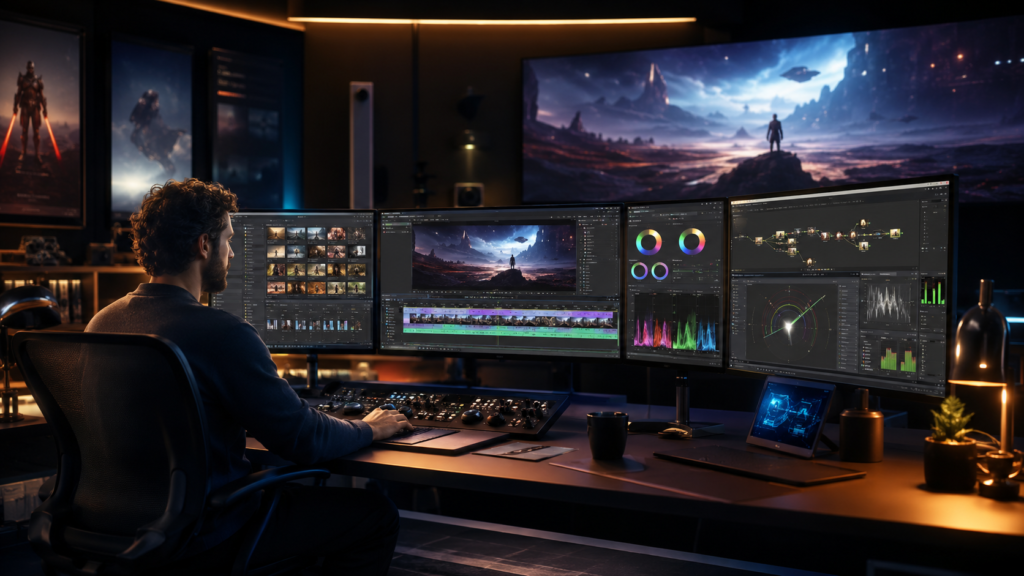
Post-production is one of the most practical areas for AI. Editors can already use AI for transcription, subtitle generation, noise reduction, colour matching, object removal, background extension, footage upscaling, dialogue cleanup, voice isolation, and social media reframing.
This does not mean AI replaces the editor. Editing is not only technical work. It is emotional storytelling. The editor decides when to cut, when to hold a silence, when to reveal information, and when to make the audience feel tension.
AI can save time, but the emotional rhythm must still come from human judgment.
For documentary filmmakers, AI transcription can save many hours. For social media creators, AI can quickly create vertical versions of videos. For film editors, AI can clean audio, remove small mistakes, and improve workflow speed.
In post-production, AI is not just a futuristic idea. It is already becoming a practical productivity tool.
AI Voice, Dubbing, and Localization
AI is also changing dubbing and localization. A film is no longer limited to one language market. With AI tools, filmmakers can create subtitles, translations, guide voice tracks, multilingual trailers, and even AI-assisted dubbing.
For Sri Lankan cinema, this is a major opportunity. Sinhala and Tamil films can reach international audiences more easily if they are properly subtitled and promoted in different languages.
However, voice cloning and AI dubbing must be handled ethically. Actors must give permission before their voices are cloned or reused. The industry must protect performer rights and avoid misuse of identity.
AI in Film Marketing
GenAI is also powerful for film marketing. A film can be artistically strong but still fail if it is not promoted properly. AI can help create poster concepts, trailer copy, social media captions, press releases, blog articles, audience segments, YouTube descriptions, email campaigns, and promotional strategies.
A thriller film, for example, can use AI to create character mystery posts, teaser captions, fan theory campaigns, countdown graphics, behind-the-scenes content ideas, and multilingual promotional material.
This allows even low-budget films to run professional digital campaigns.
Ethical Challenges
Generative AI also brings serious challenges. Copyright, actor likeness, voice cloning, deepfakes, job displacement, and cultural sameness are major concerns.
Filmmakers must avoid copying existing artists, famous actors, studio styles, copyrighted characters, or recognizable voices without permission. AI should be used responsibly, transparently, and ethically.
The goal should not be to replace human creativity. The goal should be to expand it.
How Filmmakers Can Start Using Gen AI Today
A filmmaker does not need to wait for a big studio to start using AI. The best way is to begin with small, practical workflows.
Start with concept development. Use AI to expand story ideas, loglines, and character profiles.
Then create visual references. Generate mood boards for locations, costumes, lighting, colour palettes, and key scenes.
Next, build a pitch package. Use AI-generated concept visuals, a strong synopsis, a director’s vision statement, and a teaser-style presentation.
After that, test short cinematic clips. Use AI video tools to create atmosphere shots, dream sequences, visual experiments, or promotional teasers.
Finally, use AI for marketing. Prepare social media content, trailers, posters, campaign ideas, and audience-specific promotional strategies.
This approach allows filmmakers to enter production with more clarity, confidence, and market value.
The Future: AI-Native Cinema and Hybrid Production
The future of movie making will likely become hybrid. Some films will remain fully traditional. Some will use AI only in post-production. Some will use AI for pre-visualization and marketing. Others will become AI-native productions, where AI is part of the full creative pipeline from idea to release.
Streaming platforms and major studios are already exploring AI-driven production and animation workflows. Reports indicate that Netflix has been developing internal AI animation initiatives, showing how major entertainment companies are studying Gen AI for future content pipelines.
This does not mean every film should be AI-generated. But it does mean every serious filmmaker should understand how AI is changing production economics, visual development, and audience engagement.
The filmmakers who ignore AI may fall behind. The filmmakers who use AI without taste may create empty content. But the filmmakers who combine AI with powerful human storytelling can create a new kind of cinema.
Conclusion
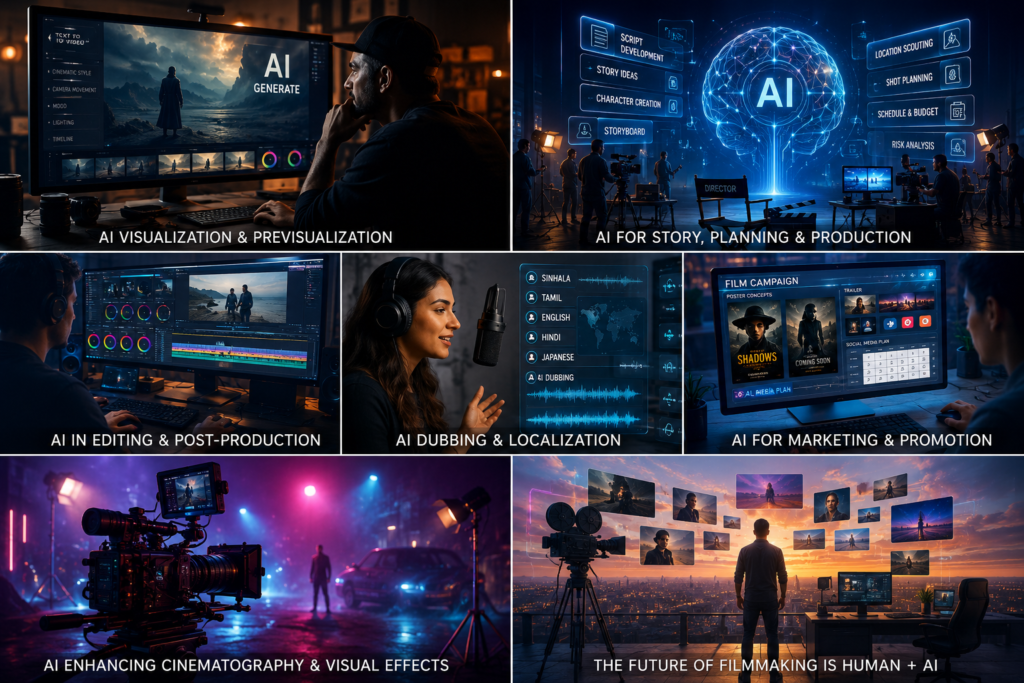
Generative AI is transforming filmmaking from idea development to final promotion. It helps filmmakers write, visualize, plan, edit, localize, and market their stories with greater speed and creative power.
But AI is only a tool. The heart of cinema is still human emotion. AI can generate a crying face, but it does not truly understand why a person cries. It can create a beautiful frame, but it cannot feel the silence between two characters.
The future belongs to filmmakers who combine AI with strong storytelling, cultural understanding, ethical responsibility, and personal artistic vision.
For Sri Lankan filmmakers, this is a historic opportunity. We can use GenAI not only to imitate global cinema, but to tell our own stories with greater power — our villages, cities, families, dreams, pain, humour, music, and social realities.

 Generative AI and Creativity: The New Partnership Between Human Imagination and Intelligent Technology
  The Future of Movie Making: How Generative AI Is Transforming Cinema
  The Influence of Gen Z on Marketing and Consumer Trends
  Experience-Driven Marketing: Redefining the Customer Journey
  Managing Creator Partnerships: Strategies for Sustainable Collaboration
  Haptic Marketing Communication: Touching the Future of Brand Engagement