 indika.creator@gmail.com
 Generative AI and Creativity: The Future Is Human Imagination Powered by Technology
Creativity is entering a new era.
For many years, technology has changed the way creative people work. Photography changed art. Cinema changed storytelling. Digital software changed design, editing, advertising, and communication. Today, Generative AI is becoming the next major creative revolution.
But this revolution is not only about machines creating content. It is about how human imagination can become faster, stronger, and more powerful with intelligent technology.
Generative AI can now support writing, design, video production, advertising, branding, music, film development, social media content, and business communication. It can create ideas, images, scripts, concepts, mood boards, campaign directions, and visual references within seconds.
This gives creators a powerful advantage. A filmmaker can visualize a scene before production. A designer can explore many brand directions. A marketer can test different campaign messages. A writer can develop stronger article structures. A business owner can create professional content faster.
However, the most important point is this: AI is not a replacement for true creativity.
Real creativity is deeply human. It comes from emotion, culture, experience, memory, pain, ambition, vision, and taste. AI can generate an image, but it does not feel the story behind it. AI can write words, but it does not truly understand human struggle, love, fear, silence, or hope.
That is why the future of creativity will not belong to people who simply use AI. It will belong to people who know how to direct AI with strong human vision.
The new creative professional must become more than a tool user. They must become a creative director, strategist, storyteller, and technology-powered thinker. In the AI era, prompting is not just typing. Good prompting is direction. It requires clarity, taste, emotional intention, visual understanding, audience awareness, and brand thinking.
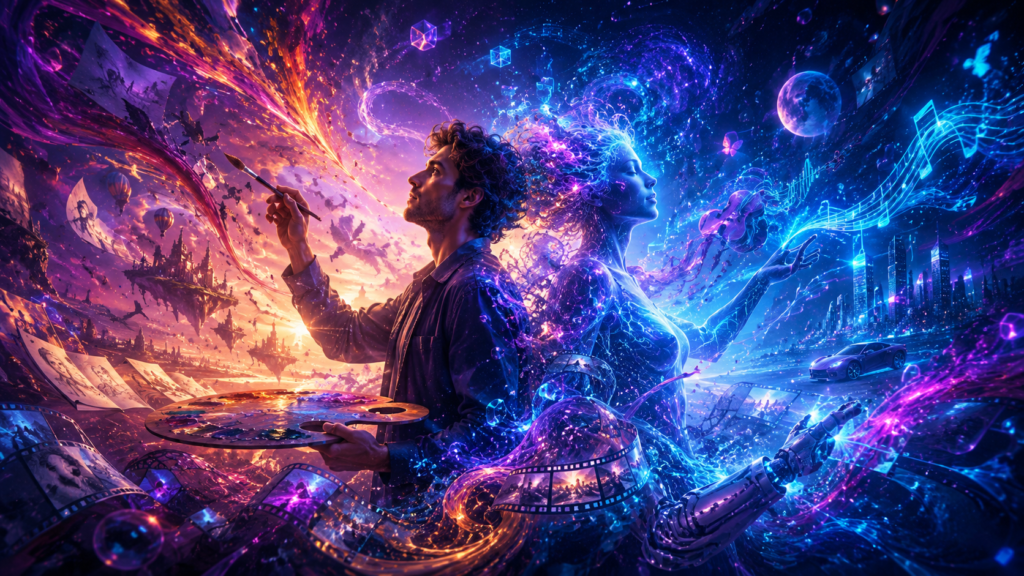
AI can give 50 options. But the human creator must know which one is powerful.
AI can generate content quickly. But the human creator must know what is meaningful.
AI can create visuals. But the human creator must know what feels original, premium, and emotionally connected.
This is where human taste becomes more valuable than ever.
At the same time, there is a risk. If everyone uses the same AI tools in the same way, creative work can become repetitive. Many AI-generated designs, images, articles, and videos already look similar. This means creators must not use AI only to create more content. They must use AI to create better content.
The goal is not speed alone. The goal is originality, meaning, strategy, and impact.
For filmmakers, designers, marketers, writers, and entrepreneurs, Generative AI creates a major opportunity. It allows small teams and independent creators to compete at a higher level. A talented creator no longer needs a massive budget to develop visual concepts, pitch ideas, create marketing content, or build professional presentations.
This is especially powerful for creators in emerging markets. With the right skills, a creative professional from Sri Lanka, India, or any part of the world can now produce international-level concepts and communicate with global audiences.
But this opportunity must be handled responsibly. AI should be used ethically. Creators must respect copyright, human identity, actor likeness, voice rights, cultural sensitivity, and originality. AI should enhance creativity, not steal it.
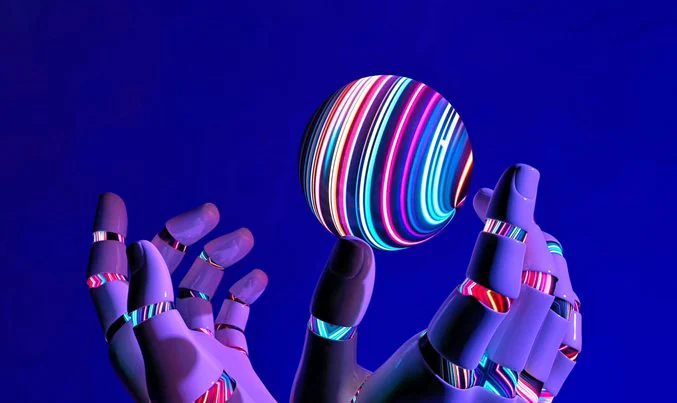
The future is not “AI versus humans.”
The future is AI with humans.
Generative AI can accelerate creativity.
Human imagination gives it direction.
AI can create options.
Human judgement creates meaning.
AI can support production.
Human emotion creates connection.
The next generation of creative leaders will be those who combine artistic vision, strategic thinking, cultural understanding, and AI-powered execution.
Generative AI will not replace true creativity. It will expand what creative people can imagine, produce, and share with the world.
The future of creativity is not machine-made.
It is human-led, AI-powered, and full of new possibilities.

 The Future of Movie Making: How Generative AI Is Transforming Cinema
 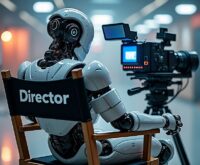 The Future of Movie Making: How Generative AI Is Transforming Cinema
  The Influence of Gen Z on Marketing and Consumer Trends
  Experience-Driven Marketing: Redefining the Customer Journey
  Managing Creator Partnerships: Strategies for Sustainable Collaboration
  Haptic Marketing Communication: Touching the Future of Brand Engagement